
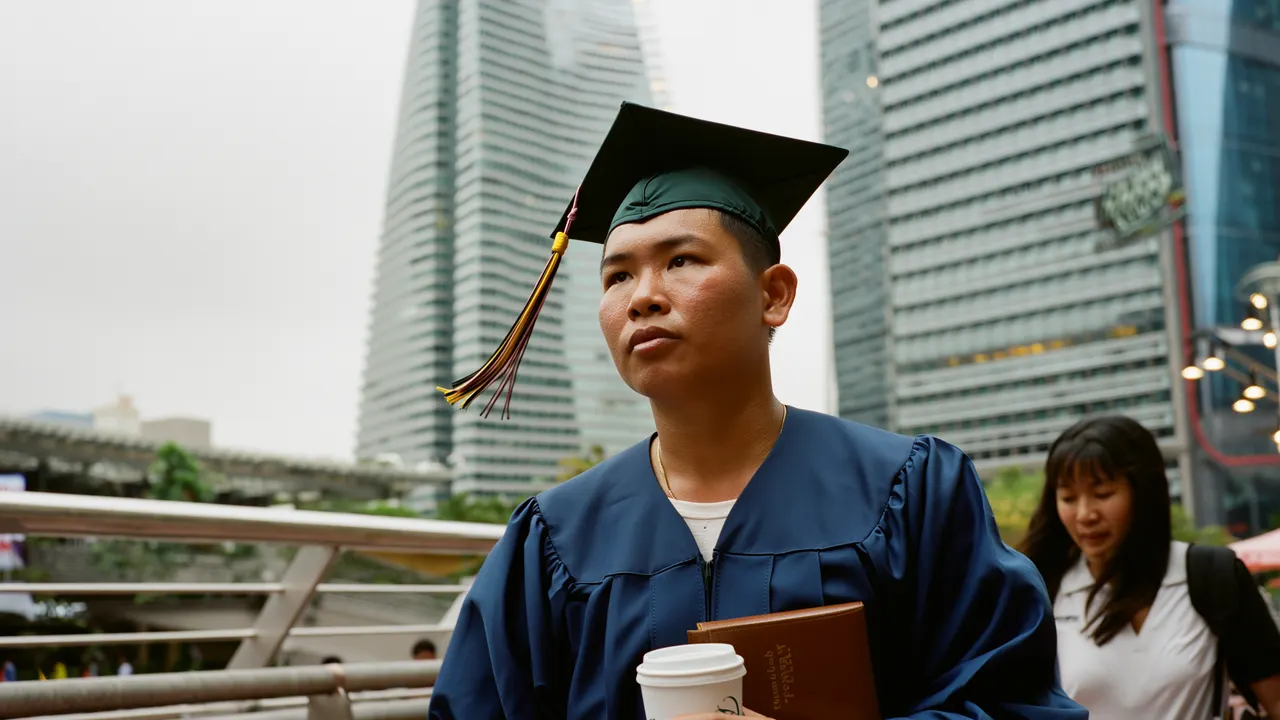
Most graduates treat year one as a settling-in period. Rest, decompress, figure things out slowly. That instinct is wrong — and it will cost you five years.
The window right after your degree is the most leveraged time in your working life. You have energy, you have flexibility, you have no mortgage, no kids, and no reputation to protect. The useful skills you build in this 12-month window will compound for the next decade. The ones you skip will become gaps that follow you into every room. Graduates who figure this out early do not just get better jobs — they build entirely different trajectories.
Here are the five skills worth attacking in year one.
Real communication, not just presentation skills
Every university teaches you to present. NUS, NTU, SMU, SUTD — all the group projects, the slides, the Q&A sessions. What they do not teach is how to actually change someone’s mind in a live conversation.
Communication that moves people is a different muscle. It means listening to identify what someone actually wants, framing your point around their concern rather than yours, and knowing when to stop talking. It means handling a room that is not on your side. It means asking questions that open people up rather than shutting them down.
This skill is the single highest-leverage useful skill after a degree in Singapore because every career path runs on it. You cannot lead a team, close a deal, negotiate a salary, or get a mentor’s attention without it. And almost no one your age is building it deliberately.
Start by volunteering for conversations that make you slightly uncomfortable. Pitch ideas to people who will push back. Debrief every difficult conversation afterward: what worked, what did not, why.
Financial literacy that starts with your own CPF
You likely know what CPF is. You probably do not know what your OA balance will be at 35 if you contribute the minimum from today, or what a 25-year HDB mortgage actually costs in total interest, or how dollar-cost averaging into a low-cost index fund differs from the insurance savings plan your bank just called you about.
Financial literacy is not about becoming an expert. It is about understanding the basic mechanics of your own financial life well enough to make one or two better decisions per year.
Those decisions compound. A 24-year-old who understands the difference between growing assets and lifestyle inflation makes different choices than one who does not. By 32, that gap is visible. By 40, it is very large.
Spend one hour a week on this for your first year out. Read your CPF statement properly. Model out your BTO numbers before you think you need to. Understand your employer’s CPF contributions and what vesting means if you leave.
Structured thinking under pressure
University trained you to think carefully when you have time. Work requires thinking clearly when you do not.
Structured thinking means being able to break a problem into its parts, identify what is actually uncertain versus what just feels uncertain, and communicate a clear recommendation under conditions that are messy, fast, and incomplete. It is a skill that distinguishes the graduates who rise quickly from those who stay execution-level for years.
The fastest way to build it: every time you face a real work problem, force yourself to write it down. What is the actual question? What are the two or three possible answers? What would you need to know to choose? The habit of converting fuzzy situations into explicit structure is something you can practice daily.
This is one of the most transferable and underrated useful skills after a degree in Singapore. It does not care what industry you are in.
Managing your own energy, not just your time
Most productivity advice is about time. Block your calendar. Use a task manager. Batch your deep work. That advice is fine. What it misses is that two hours of high-focus work produces more than six hours of distracted work, and the variable that determines which you get is not your schedule — it is your energy.
Year one is when you establish whether you are someone who runs on sustained intensity or someone who runs at 60% and calls it normal. The habits that govern sleep, exercise, and recovery are far easier to set now, before the pressure of a mortgage or a senior role locks in your defaults.
This is not a wellness sermon. It is a performance point. The graduates who are consistently sharp in meetings, in presentations, in high-stakes conversations are almost always also the ones who take their physical state seriously. It is not a coincidence.
The ability to sell — even if you never sell anything
Selling gets a bad reputation. In Singapore especially, there is a cultural flinch around it. That flinch is expensive.
Selling, stripped of the negative associations, is the ability to get someone to choose your idea over an alternative. You do it when you pitch a project. When you negotiate your starting salary. When you try to get a senior colleague to take your recommendation seriously. When you convince a client that your firm is the right choice.
If you cannot advocate for your own ideas with confidence and clarity, none of your other skills will travel as far as they should. This is why “useful skills after degree singapore” searches consistently surface communication and persuasion — because everyone who has been in the workforce a few years knows that technical skill alone does not get you where you want to go.
The useful skills after degree in Singapore that matter most are almost all downstream of this one. Build it by creating situations where you have to make a case and someone can say no.
What to do this week
Pick one of the five. Not all five — one. Decide what a deliberate weekly practice looks like, and put it in your calendar before the end of the week.
The graduates who make the most of year one are not the ones with the most ambitious lists. They are the ones who actually showed up for something specific, week after week, and let the reps do the work.
If this hit, the longer version of this thinking lives in our apply for the next cohort — a free 14-day reading sequence on the same operating-system.
Written by Leo Tan, FINternship's founder, an NUS Engineering graduate who has mentored over 1,000 young adults across Singapore.