
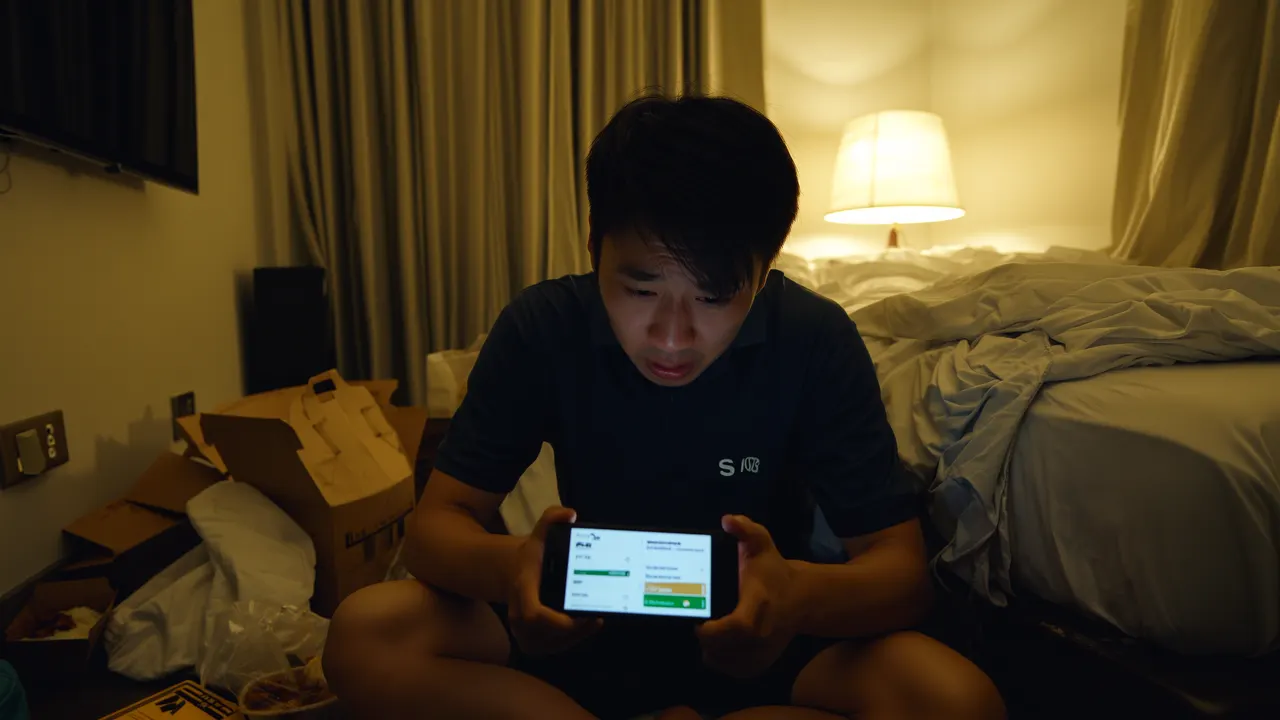
Most personal finance advice for young Singaporeans is a polished version of the same lecture: spend less on bubble tea, cut the Netflix subscription, and eventually you will have money. That is not advice. That is noise dressed up as discipline.
Being broke in your 20s in Singapore is not a spending problem for most people. It is a structural problem — the money coming in is too small, and the money that arrives is routed badly before you ever touch it. No amount of brown-bagging your lunch fixes a structure that is working against you. Five moves actually change the number at the bottom of your bank statement. None of them is “just budget better.”
Fix the income side before you touch the expense side
The conventional advice attacks expenses first because that feels controllable. But if you are earning $2,200 take-home — a real number for many fresh grads in Singapore — there is a hard floor on what expense cuts can do. You cannot cut your way to $500 more a month without destroying your quality of life in a city that is structurally expensive.
The honest math: a 10% raise on a $2,200 salary is $220. A 10% cut on the same income, if you are already living lean, involves real pain. Income is a multiplier. Expenses are a subtractor. Start with the multiplier.
This means treating your current job as a floor, not a ceiling. Negotiate your starting offer — most fresh grads in Singapore do not counter, and companies build room for it. Build a skill that commands a different rate. Treat your earnings trajectory as the most important financial variable of your 20s.
Most people who are broke in their 20s in Singapore are not irresponsible. They are under-earning relative to their cost of living. Name that clearly before you attack the wrong variable.
Build a cash flow architecture, not a budget
Budgets fail because they require a conscious decision every day. Architecture works because it routes money automatically before you can spend it.
When your salary arrives, move money to three places immediately — before you see it sitting in your main account:
- A bills account (rent, phone, transport top-up, fixed subscriptions)
- A savings account that is not your DBS or POSB main account
- A buffer for irregular expenses (medical, travel, festive seasons)
What remains is your actual spending money. You are not fighting temptation. You are just not giving yourself the option.
The specific percentages matter less than the act of separating the pools. Get the structure in place first. Adjust the split as your income grows.
Know your CPF before it confuses you
Most Singaporeans aged 18–28 either ignore CPF completely or treat it as money that does not exist. Neither position serves you.
Your CPF Ordinary Account earns 2.5% per year — not exciting, but guaranteed and compounding. If you start work at 23 and contribute until 55, that is 32 years of compounding on a growing balance. Your Medisave and Special Accounts earn 4–5%. The government pays extra interest on the first $60,000 combined. This is not nothing.
The move is not to obsess over CPF. The move is to stop treating it as an invisible tax and start checking it monthly. Know your OA balance. Know that it can fund a BTO downpayment. Know that voluntary top-ups to your SA reduce your taxable income. These are not complicated ideas — they are just ones nobody explains clearly before you start earning.
Get your housing math right before you sign anything
BTO applications are the biggest financial decision most Singaporeans make in their 20s, and most people enter that decision with a vague sense that it will work out financially. That is not a plan.
Know the full number before you ballot. Purchase price, CPF used, monthly mortgage, stamp duty, renovation budget, and what your combined take-home looks like after CPF contributions are deducted. The monthly mortgage on a $400,000 flat at 2.6% over 25 years is roughly $1,800. If your combined take-home is $5,000, that is 36% of take-home on housing — before you touch renovation costs.
Run that model before you apply, not after you collect the keys. If the numbers do not work at your current income, that is useful information. Build toward the income first.
Stop parking your savings in a standard savings account
A POSB ordinary savings account earns roughly 0.05% per year. Inflation in Singapore runs at 2–3%. Money sitting in a default bank account loses purchasing power every year. You are not being safe. You are being slowly taxed.
The basic alternative for money you will not need in the next twelve months: Singapore Savings Bonds average around 3% if held to maturity, are capital-guaranteed, and can be redeemed within about a month. Six-month T-bills have been paying 3.5–4% in recent years. Neither requires a brokerage account. Both are issued by the Singapore government.
This is not investing. This is not taking risk. This is collecting a rate that is available to anyone and costs nothing to set up.
The honest next step
If you are broke in your 20s in Singapore, it almost never comes down to one thing. It comes down to a slow accumulation of bad defaults — a savings account earning nothing, a starting salary you never negotiated, a CPF balance you have never opened, and a BTO plan built on optimism instead of numbers. None of the five moves here require a finance degree. They require attention and thirty minutes on a Sunday.
Fix the income first. Build the architecture second. Then go after the CPF, the housing math, and the savings rate. In that order.
If this hit, the longer version of this thinking lives in our join the free masterclass — a free 14-day reading sequence on the same operating-system.
Written by Leo Tan, FINternship's founder, an NUS Engineering graduate who has mentored over 1,000 young adults across Singapore.