
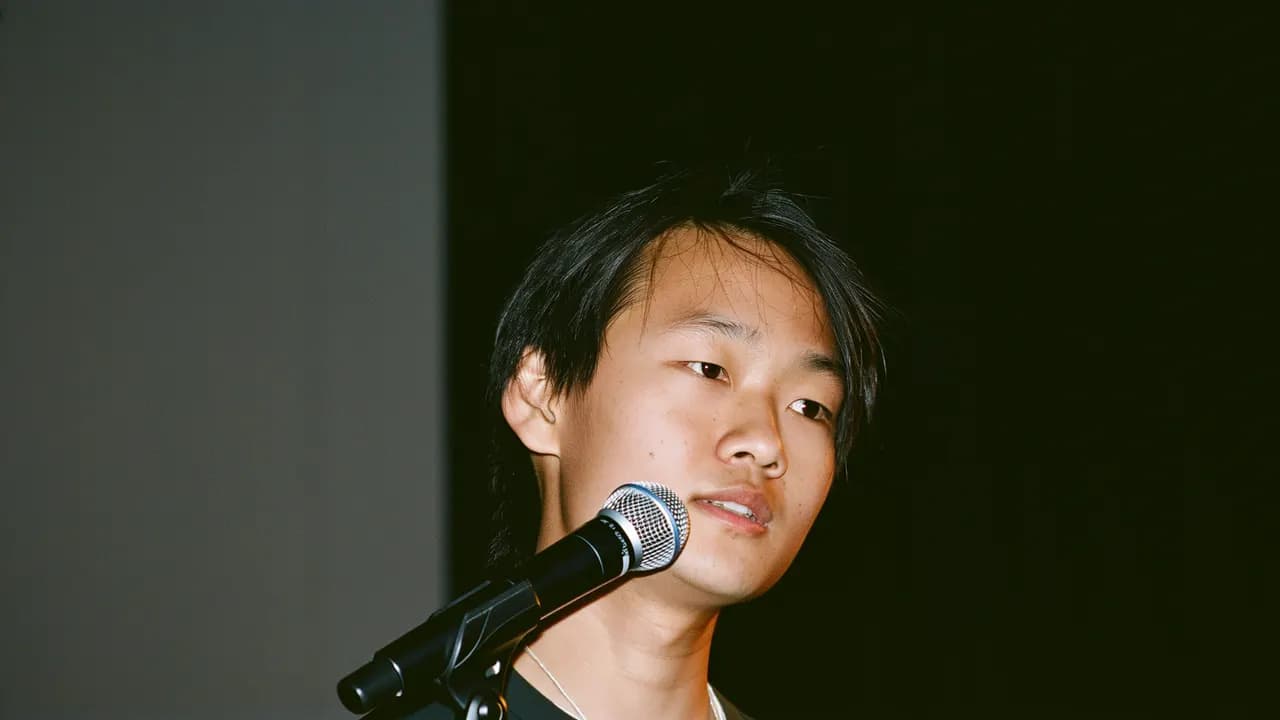
Every person who looks comfortable on stage got there by doing it badly, repeatedly, in front of real people, until their nervous system stopped treating a microphone like a threat.
The conventional wisdom is that public speaking is a personality trait — you either have “it” or you don’t. Some people walk into a room and just own it. The rest of us stumble over our words, speak to the floor, and replay the cringe on loop for three days after. But this framing is wrong, and it’s doing a lot of damage to a generation of smart people who’ve opted out of developing one of the most transferable skills they could build.
The Myth of the Natural Speaker
There are no natural speakers. There are only people who have spoken more, and people who haven’t.
The person who seems effortlessly articulate at your NUS orientation camp? They’ve been in debate, drama, or student government since secondary school. The colleague who takes the floor in meetings without breaking a sweat? Watch how they prepare — most of them rehearse, even if quietly, even if they don’t call it that.
Public speaking in Singapore is a particularly loaded skill because our education system doesn’t train it systematically. Most schools give you a few presentation slots per semester and grade you on the output, not the process. Nobody teaches you how to manage the physical sensation of nervousness. Nobody tells you that a shaky voice isn’t a character flaw — it’s just an untrained response.
The result is that most people in their twenties have formed a story about themselves: “I’m just not a speaker.” That story is wrong. It’s a skill gap, not a personality type.
What’s Actually Happening When You Freeze
When you stand up to speak and your mind goes blank, that’s not weakness. It’s your nervous system doing its job badly.
Speaking in front of a group registers as a threat to the brain — it activates the same fight-or-flight circuitry that kicks in when you’re physically in danger. Your heart rate spikes. Blood flow shifts away from your prefrontal cortex (the part that organises your thoughts) toward your muscles (the part that would help you run). This is why you go blank. Your brain literally has less capacity for complex cognition in that moment.
The good news: this response is trainable. Repeated exposure to the trigger — getting up and speaking — gradually re-signals your nervous system that the microphone is not a predator. The anxiety doesn’t disappear, but it stops being overwhelming. Most experienced speakers still feel nerves before speaking; they’ve just learned to perform alongside the feeling.
You cannot think your way out of this. You have to expose your way out.
The Boring Drill That Fixes 80% of the Problem
Here is the single most effective thing you can do to improve: speak for two minutes, on a random topic, to a camera, every day for thirty days.
That’s it.
No script. No editing. Pick a topic when you sit down — what you had for lunch, a news story you read, why Singapore’s BTO application process is stressful — and speak for two minutes. Then watch it back.
The first week will be painful. You’ll notice every filler word, every long pause, every time your eyes drop to your lap. That’s the point. You’re building self-awareness you cannot get any other way.
By week two, you’ll start self-correcting in real time. By week four, you’ll notice you’re filling the two minutes without panicking, that your sentences have a shape, that you’re making eye contact with the lens.
This drill has nothing to do with charisma. It’s pattern recognition and muscle memory. The camera is not kind, which is exactly why it works.
Where to Practice Without Paying $2k for a Course
There are good free and near-free options for public speaking in Singapore that most people walk past without noticing.
- Toastmasters clubs — over 100 clubs across universities, corporates, and community centres. Membership runs around $80–120 per half-year. First two visits are free.
- NUS, NTU, SMU, SUTD, SIM speech clubs — if you’re still enrolled, these are often free and chronically underused.
- Debate societies at polytechnics and JCs — alumni often run community events open to young adults.
- Internship presentations — actively volunteer for the slot most people avoid.
- FINternship group sessions — real practice in a small-group setting with structured feedback.
The real unlock is not finding the perfect environment. It’s accumulating repetitions. Every time you stand up and speak — even badly — you are building the tolerance your nervous system needs.
The One Thing That Separates People Who Improve
Most people who try public speaking and conclude they’re bad at it made one mistake: they practised performing without practising structure.
Confidence in public speaking — in Singapore or anywhere — is mostly confidence in your material. If you know exactly what point you’re making and why, you have something to fall back on when your brain fogs. If you’re winging it, fog means nothing comes out.
The most practical structure for most speaking situations: one main point, three supporting observations, one call to action. That’s a talk. You can give that talk in two minutes or twenty. Knowing the structure means you always know where you are in the room.
Prepare the structure. Practise the delivery. The words will sort themselves out.
What to Do This Week
Pick one. Not three. One.
If you have never recorded yourself speaking, do the two-minute drill tonight. If you’ve been thinking about joining a Toastmasters club for six months, look up the nearest one and book a visitor slot this weekend. If you’re at university, find out if your faculty has a speech or debate club and show up once.
Public speaking is a compound skill. Every rep builds on the last one. The people who are good at it right now are simply the people who started earlier than you. You haven’t missed anything. You’re just at rep one.
If this hit, the longer version of this thinking lives in our apply for the next cohort — a free 14-day reading sequence on the same operating-system.
Written by Leo Tan, FINternship's founder, an NUS Engineering graduate who has mentored over 1,000 young adults across Singapore.